



Meditation, or Dhyan, is the practice of gathering a scattered mind and turning it gently inward. In Gurudev Pandit Shriram Sharma Acharya's teaching, it is the inner heart of sadhana — the path through which a person remembers their true nature and their bond with the Divine. It is not about forcing the mind to go blank, but about giving it one clear direction. With patience, the restless mind grows calm, the inner self grows luminous, and life finds a steadier, kinder centre.
Dhyan Yoga — Taming the Mind
The mind, Gurudev says, is like a wild elephant — immensely powerful, but apt to run amok. Meditation is the rope that gently tames it, so its strength can be turned toward good. Left untended, the mind's energy scatters and is lost, like sunlight falling everywhere yet warming nothing. Focused — as sunlight through a lens — that same energy can light a fire. This is the quiet miracle of concentration: gathering the mind's dispersed currents and pointing them in one direction. The deeper purpose, though, is remembrance — to wake from the long forgetting of who we are, and to feel again our bond with the Divine. As that bond is felt, the fear and restlessness of life begin to fall away.
- The mind is a wild elephant; meditation is the rope that tames it
- Scattered energy is wasted; focused energy works quiet miracles
- The aim is remembrance — waking to who we truly are
Two Ways to Meditate — With Form and Formless
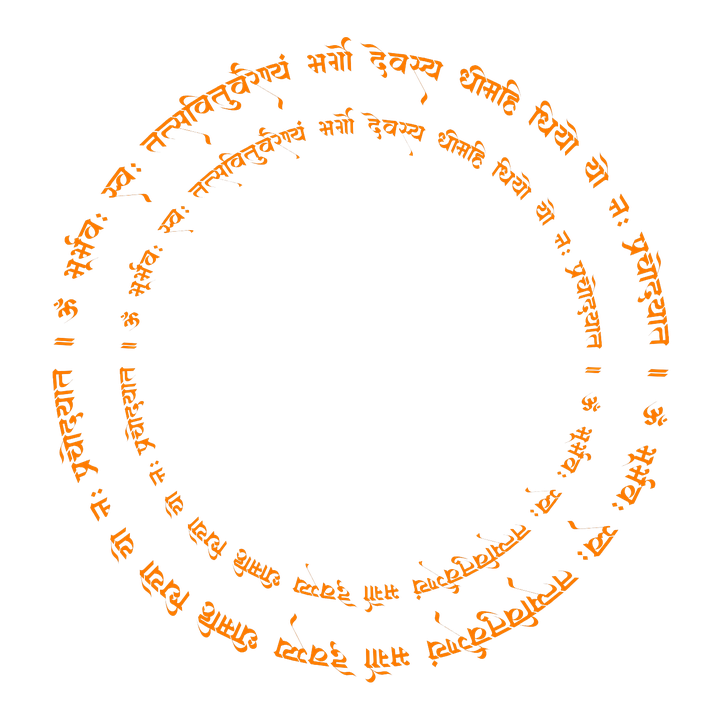
Gurudev taught us two gentle ways of meditation, and both begin with a symbol. In the meditation with form (Sakar Upasana), the seeker meditates on a beloved form — for example, visualizing Gayatri Mata within a soft sphere of light, and slowly feeling a warm, intimate closeness, as a child feels toward the mother. In formless meditation (Nirakar Upasana), the form gives way to light itself: most often Savita — the radiant energy of the rising sun, imagined as golden rays soaking into body, mind, and inner self. The Gayatri Mantra is the bridge that invokes this light. Whichever path one chooses, what matters most is not perfect stillness but heartfelt feeling (bhava) and a willing surrender. God is never seen with the eyes — only known as growing goodness in thoughts, words, and deeds.
- Meditation with form — meditating on a loving form, like Gayatri Mata, within a sphere of light
- Formless meditation — meditating on light itself, the golden rays of Savita (the sun)
- What matters most is heartfelt feeling and willing surrender, not force
How to Begin — Gently, and Without Hurry
Beginners often imagine that meditation means a perfectly blank, motionless mind. Gurudev is reassuring here: that deep stillness (samadhi) comes only after long practice, and chasing it early only brings frustration. In the beginning, the real work is simpler — gently bringing the wandering mind back, again and again, to one chosen point. It is enough that the flow of thought turns in a single direction. Sit at a fixed time each day, ideally in the calm of early morning, with the rising sun or a loved form held softly in the mind. Let feeling lead, not strain. Practised daily, even a few quiet minutes slowly reshape the inner self.
- Don't chase a blank mind — simply return, gently, to one point
- A fixed daily time, ideally early morning, builds the habit
- Let feeling lead, not strain — a few quiet minutes daily are enough to begin
Learn more — books & resources
These titles by Gurudev Pandit Shriram Sharma Acharya explore meditation (Dhyan) in depth. Read free online, or order a copy.
🙏 Take Part
Contact us for more information or to register — all are welcome, no prior experience needed.